" There can be no peace on earth while out atmosphere is choked with carbon"
The Earth’s climate has changed throughout the history. In the last 650,000 years
there have been seven cycles of glacial advance and retreat, with the abrupt
end of the last ice age about 7,000 years ago marking the beginning to the
modern climate era and of human civilization.
Climate change is the change in the pattern of weather, and related changes in the oceans, land surfaces and ice sheets, occurring over the time scales of decades or longer.
Since it is not possible to go back in the time to directly observe and measure
climate, scientist use indirect evidence to determine the drivers of factors of
climate change. The indirect evidence include data collected using ice cores,
boreholes, tree rings, glacier length, pollen remains and oceans
sediments.
Volcanoes
Anthropogenic Drivers
Greenhouse gases are probably the most significant drivers of the climate. When heat energy from the sun strikes the Earth, gases known as greenhouse gases trap the heat in the atmosphere, as do the glass panes of a greenhouse keep heat from escaping.
The greenhouse gases that affect Earth include:
Greenhouse Effect
Climate change is the change in the pattern of weather, and related changes in the oceans, land surfaces and ice sheets, occurring over the time scales of decades or longer.
Earth’s climate is now changing much
faster than at any point in the history of modern civilization due to human
activities. Climate change as a result of anthropogenic greenhouse gas (GHG)
emission leads to many adverse well – reported impacts:
- Global Temperature increases
- Sea – level rise
- Loss of biodiversity
- Desertification
- Water and Food
insecurity
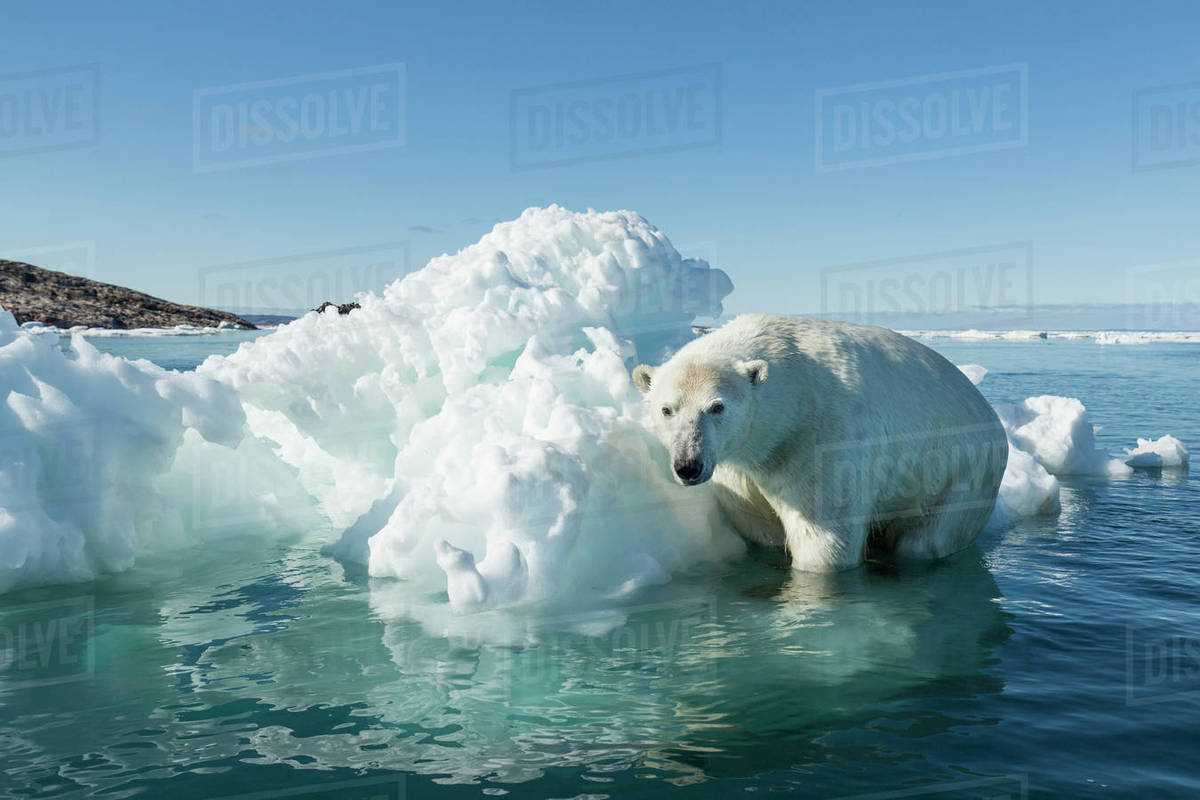 |
| Polar Bear climbing onto the ice berg |
Before
the Industrial Era (pre – 1780) there were 3 drivers of climate change that may
not related to human activity or atmospheric gases:
- Milankovitch Cycles
- Solar Irradiance
- Volcanic Eruption
Milankovitch Cycle
The Milankovitch cycles are caused by the changes in the shape of the
Earth’ orbit
around the sun, the tilt of the Earth’s rotation and the wobble of our axis.
The natural global warming and cooling, is considered to be initiated by the
Milankovitch cycle. This cycle describes the effect of slight changes in the
Earth’s orbit on Earth Climate. The length in the Milankovitch cycle ranges
between 19,000 and 100,000 years.
Solar Irradiance
Energy from the Sun in the form of electromagnetic radiation is
the fundamental driver of the Earth’s climate system. Variations in the
frequency composition and intensity of incident solar radiation hitting the
Earth may produce changes in both the global and regional climate which are
different and additional to those from man-made climate change.
The impacts of undulating UV solar radiation may be substantial. Since UV radiation creates ozone in the stratosphere, the oscillation in UV levels can affect the size of the ozone hole. Absorption of UV radiation by the ozone also heats up the stratosphere. Many scientists suspect that changes in stratospheric temperatures may alter weather patterns in the troposphere. Finally, an increase in the amount of UV radiation could impact human health, increasing the incidence of skin cancer, cataracts, and other Sun-exposure-related maladies.
Volcanoes
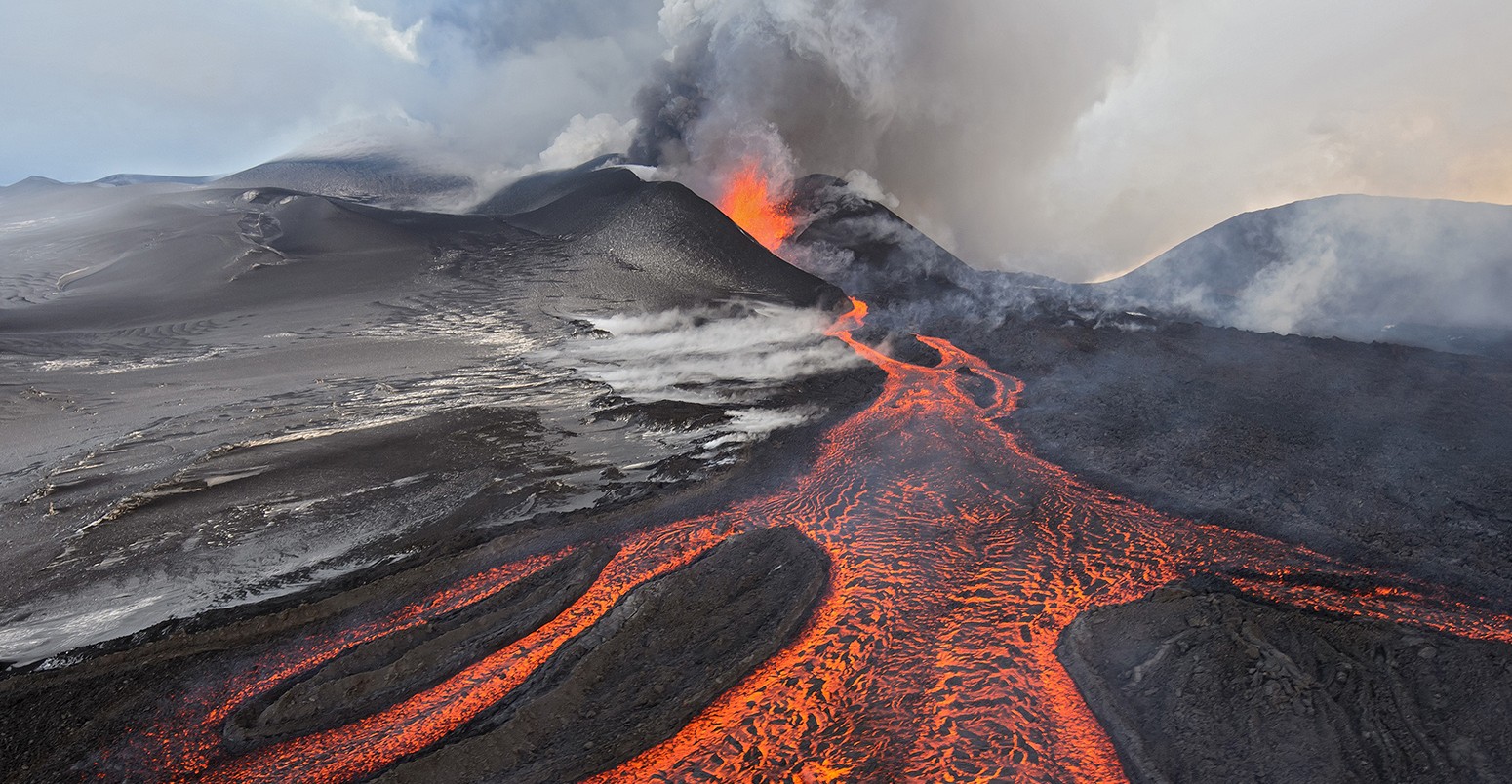 |
| Volcanic Eruption |
Volcanic eruptions are a third natural driver of climate change.The gases and solids released by volcanic eruptions can include carbon dioxide, water vapor, sulfur dioxide, hydrogen sulfide, hydrogen, and carbon monoxide. Generally, volcanic eruptions cool the climate. This occurred in 1783 when volcanoes in Iceland erupted and caused the release of large volumes of sulfuric oxide.
This led to haze-effect cooling, a global phenomenon that occurs when dust, ash, or other suspended particles block out sunlight and trigger lower global temperatures as a result; haze-effect cooling usually extends for one or more years.
Greenhouse gases are probably the most significant drivers of the climate. When heat energy from the sun strikes the Earth, gases known as greenhouse gases trap the heat in the atmosphere, as do the glass panes of a greenhouse keep heat from escaping.
The greenhouse gases that affect Earth include:
- Carbon dioxide - is released through natural processes such as respiration and volcano eruptions and through human activities such as deforestation, land use changes, and burning fossil fuels.
- Methane - A hydrocarbon gas produced both through natural sources and human activities, including the decomposition of wastes in landfills, agriculture, and especially rice cultivation, as well as ruminant digestion and manure management associated with domestic livestock. On a molecule-for-molecule basis, methane is a far more active greenhouse gas than carbon dioxide
- Water Vapor - the most abundant greenhouse gas, but importantly, it acts as a feedback to the climate. Water vapor increases as the Earth's atmosphere warms, but so does the possibility of clouds and precipitation, making these some of the most important feedback mechanisms to the greenhouse effect.
- Nitrous Oxide - a powerful greenhouse gas produced by soil cultivation practices, especially the use of commercial and organic fertilizers, fossil fuel combustion, nitric acid production, and biomass burning
- Chlorofluorocarbons (CFCs). Synthetic compounds entirely of industrial origin used in a number of applications, but now largely regulated in production and release to the atmosphere by international agreement for their ability to contribute to destruction of the ozone layer
Greenhouse Effect
- Solar radiation (ultraviolet, visible, Infrared radiation) reaches the Earth's atmosphere - some of this (30%) is reflected back into space.
- The rest of the sun's energy (70%) is absorbed by the land and the oceans, heating the Earth.
- Heat radiates from Earth towards space.
- Some of this heat is trapped by greenhouse gases in the atmosphere, keeping the Earth warm enough to sustain life.
- Human activities such as burning fossil fuels, agriculture and land clearing are increasing the amount of greenhouse gases released into the atmosphere.
- This is trapping extra heat, and causing the Earth's temperature to rise. The gradual increase in the overall temperature of the Earth's atmosphere and surface is know as Global Warming
Climate Change
Very nice
ReplyDeleteVery nice
ReplyDeleteThanks for this post!
ReplyDeleteThis post really helped me to learn so much things about Climate change.
Interesting
ReplyDeleteVery well illustrated
ReplyDeleteNice 0.0
ReplyDeleteinformative
ReplyDeleteInteresting
ReplyDeleteVery interesting. Provide various details and especially the part of volcanoes since we on a volcanic island which i assume was taken as example.
ReplyDeleteNice and good illustrative of information
ReplyDelete